Showing posts with label My Pilgrimage. Show all posts

Friday, December 17, 2021

A Christmas fantasy

Can Christmastime be far behind?
Or should I say that fantasy feeling of Christmas.  I grew up in what I call a secular Christian household.  That's why I used the term to describe what I see in the general Faith today. I often see on a grand scale in the modern Church what I experienced growing up.  That is, we were culturally Protestant Christians because of course we were. We weren't Buddhists, Jewish, certainly not Catholic and, as far as I know, weren't Druid.  Therefore Christian.  But more because of what we weren't than what we were. 

My parents were believers, both of them.  Though Dad seldom graced the doors of a church until much later in life.  Mom was baptized shortly after I was born, courtesy of a neighborhood Baptist pastor who bore an uncanny resemblance to Colonel Sanders.  She was following in the footsteps of her mother, who only recently before had entered the Faith as well. 

Nonetheless, despite my mom's throwing herself into church activities, and dragging me along to VBS here or Sunday School programs there, our household was more or less secular.  We didn't pray before meals.  We seldom referenced God unless it was to call down condemnation on the world's latest leap away from traditional values.  A manger scene at Christmas with some Wise Men ornaments, next to that old Children's Bible everyone had back then, was about it. 

And every Christmas, my mom would lament the day we stopped [Spoiler Alert] believing in Santa.  She used to say how the loss of that belief just took away the magic of the holiday.  Yeah.  She got much better in later years, and I'd like to think my conversion and subsequent headfirst dive into vocational ministry helped her along.  But that was what I heard every year once I figured things out - the real magic of Christmas was gone now that we discovered the truth behind Fred Astaire's counterculture version of the tale.

Perhaps that's why, after a few years of hearing that, I began to seek ways to embrace a more magical fantasy feel during the fall and Christmas months.  As early as middle school, I can recall being a little more open to the whole fantasy gig, especially once fall and winter holidays rolled around.  It didn't come easy.  Fantasy wasn't something that was big in my house.  Nor was it big in popular culture during my younger, formative years.  The most I had as a kid was B-sci fi movies on matinee television shows or schlock D-grade horror movies on the Friday night double feature with Fritz the Night Owl.  

But by middle school, my desire to supplant this 'lack of magic' with something couldn't have come at a more fortuitous time.  After all, it was what I call the Great Fantasy Renaissance that was kicked off by the cultural phenomenon that was Star Wars.  All of a sudden, fantasy and sci-fi was everywhere.  
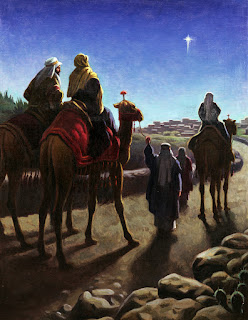
A fine magical mystery story

Through no particular design, I just began to encounter or receive things that pointed me in that direction.  If I didn't receive them, I saw them.  Again, by the early 1980s - my middle school and early high school years - fantasy and science fiction were everywhere you looked.  Toys, games, movies, books, television shows - you name it.  

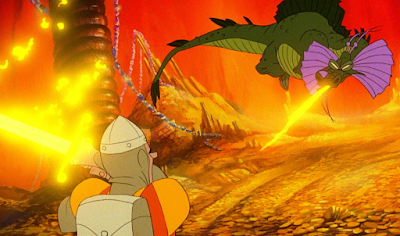
In just a few years, I received Space Invaders for Atari, as well as Atari's Adventure game.  Without asking, my parents bought me the Dark Tower board game for my birthday.  Of course there was still Star Wars, even if by the early 1980s the 'phenomenon' was finally beginning to wane.  Though it was replaced by some pretty high profile movies of the genre that would have been unthinkable a half dozen years earlier.  Movies like Conan the Barbarian, Dragonslayer, E.T., Excalibur.  There were arcade games aplenty that centered on these themes.  Dragon's Lair, Gauntlet and Crossbow were just a few that I played through the mid 1980s.  

Of course in those days, Dungeons and Dragons was the big fad and hadn't yet been confined to the ghettoes by the media.  Once in my sophomore year, at around Christmas time, I went to a gaming group that met in the basement of our First Federal Bank.  I went to peddle an idea I had for a WWII version of RISK.  While there, I saw D&D (and other similar games) played for the first time, which is probably why I didn't play it much.  Most of what I saw was a bunch of guys fighting and arguing.  I often wondered if it was because the game didn't have a stigma yet.  There were as many jocks and varsity lettermen as there were geeks and dropouts.  Perhaps it was the clash of culture between guys who normally wouldn't be caught dead with each other in school that led to the bickering. 

I dunno.  I just know that when I went it was around Christmas, as it happened to be with so many of the other offerings I've mentioned.  The arcade games were often played in or around Christmas break, when we went to other cities that had such arcade offerings in shopping centers our little town lacked.  The gifts I received, such as the Monster Manual I mentioned here, or Space Invaders, or Dark Tower, were for my birthday (December) or Christmas.  It was the mid 1980s also that my best friend bequeathed me his Christmas gift of Time Life's Enchanted World series.  Or at least the first few books he received. 

In short, by design or chance or both, I found myself swarmed by so many things that were of the sci-fi or fantasy, especially fantasy, genre, even as I was seeking out the same.  And almost always these occured some time around the holidays.  It wasn't just that I was trying to replace some lost sense of magic that my mom talked about.  Some of it was the timing.  It was just part of the cultural fads of the day.  My parents were likely just buying things they saw advertised, and friends were jumping on the latest bandwagon as kids will do. 

But it all conspired to leave imprinted in my mind an odd connection between fantasy and the fantastical at Christmas, even though I never considered myself a big fan of the genre.  It became a connection that stayed through my teen and young adult years, even before I became a Christian after college.  The hidden desire to replace that "magic" that my mom talked about bore fruit, whether I imagined it would or not.  Even if the ways in which it was sated were as much chance or cultural coincidence as anything.  Perhaps. 

Sometimes I think that inadvertent connection between the fantasy, the magical, and the mystical story of Christmas itself managed to keep me, for want of a better word, rooted.  In my most secular days in college, when I strove against logic to be an agnostic or even, dare I say, a full fledged atheist, I always found myself drawn back around Christmastime.  At the time it was likely because of this saturation of 'fantasy magical' that happened to enter my life at different Christmas signposts.  But it was enough for me to dispense with my 'STEM as Alpha and Omega' worldview I was desperately trying to cultivate. A development that, in hindsight, made it a bit easier to take the first step over Jordan once the time came. 
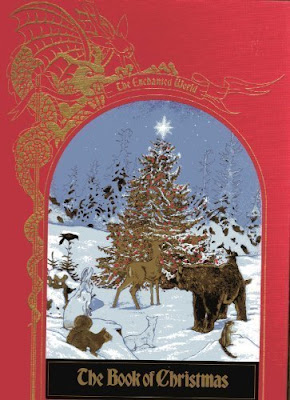
Fantasy and Christmas began to make sense

Monday, May 7, 2018

A confession

Monte Cassino shrine in S. Indiana, where my
journey to Rome properly began
At this point there is something I need to clarify or, more appropriately, confess.  A few readers picked up on this but I've never confirmed the point.  The reasons I didn't are personal, not because of money or fame or fortune.  After all, I get no money for this blog.   But events have transpired that make it necessary for me to come out and state that I have, in fact, entered the Orthodox Church.

It was a long time coming, and of course regular readers could probably see where it was heading.  It's not because of 'meanie Catholics on the Internet' or 'Gee, the Orthodox Church doesn't have any problems!', but a careful evaluation of the gravest threat to the orthodox Christian Faith I've seen in my lifetime, if not of all time, and the crumbling before it that is happening in the Church and among too many of its leaders - as well as the impact it had on my family, especially my sons.

One too many times I heard from my family, 'Why did we bother becoming Catholic? We could have gone Episcopalian and not lost everything.  After all, we hear one way's as good as another.'  Being in a moderate diocese, and a progressive leaning parish, in the age of Pope Francis, there simply wasn't anything I had to offer except, 'Trust me, it might look crazy right now, what with the pope and leaders and teachers and all, but there is still the exclusive Truth of the Church.'  As they began to waver in their faith walks, and general devotion dwindled, they began questioning the exclusive truth claims of the Church.  After all, it appeared to be led by individuals who no longer seemed to believe those very claims. 

It was in this context that we began searching for a different parish some time ago, and in which my wife suggested an Orthodox church mission that had opened up a few years earlier.  I wasn't happy with the idea, but our search for a more traditional place to take root was yielding lemons. We were getting to the point that we were beginning to consider a Protestant congregation.  So we visited the mission (a strange experience to be sure), and met the priest, himself a former Protestant.  His wife had been born Catholic as well, but left the Church years earlier.  They were not forceful, but were kindly, open and respectful to our struggles. About a year later my wife and a couple of my sons joined.

By last year it was clear that this was to be our new home, hence one reason I left Patheos (among many).  To be brutally honest?  I saw their spiritual walk turn a corner the longer we attended there.  No more feminist youth directors, pleas to not offend pro-choice parishioners, Church leaders with transgender children calling for acceptance, hearing nuns tell us those old superstitions went out with Vatican II, removing references to Hell from prayers during processionals lest we offend modern sensitivities, suggestions that tolerance is more important than truth, or implying it doesn't really matter since the hereafter is pretty much a shoo in.  For all the myriad problems the Orthodox have (and boy do they have them), doctrinally caving to the latest fancies is not one. They have other problems galore, but in the Antiochian tradition at least, they are steadfast, traditional and rooted in the claims and morals of the historical Faith against whatever storms head their way.  That alone has made a difference.  I suppose it has to do with being in regions where fealty to the Faith can mean life or death.

Anyway, that's the short version of how it happened.  There is a lot more to it all than that.  I probably should have been more open when I began looking that direction, or again when I left and began attending the Orthodox Church semi-regularly (though not exclusively).  I certainly should have said it when it became official.  Nonetheless, there are personal reasons I was holding out, though at this point other events have taken hold that have forced my hand, so I figured I better get it out in the open.

I do not leave the Church with middle fingers flaring, throwing barbs and darts and anathemas.  After all, I didn't do that to my Protestant brethren when I became Catholic, even if some did it to me.  Heck, I didn't do it to agnostics and secularists when I became Christian.  It's not my style.

Truth be told, some of the most impressive spiritual giants I've had the pleasure to meet are those within the walls of the Church.  I've already told our priest that in some ways I will always be a child of the Catholic soul.  Yet there are problems - serious, grave and significant problems, especially for young men (and the not so young) only starting out and looking for guidance in the historical Faith rather than the latest fad.  Those I will comment on down the road.

When I entered the Catholic Church, it was with all smiles, tears of laughter and a great joy.  As I entered the Orthodox Church, it was with a heavy heart and a feeling of sadness, even amidst the love and openness shown us by our new church home.  I still maintain one heart valve pointing back to Rome. Had we been born and bred Catholic, or surrounded by Catholics here in the home office rooted more in the traditional Faith, or have come into the Church fifteen or twenty years earlier, perhaps we could have weathered the storm and helped our boys work things out.  As it was, we saw things crumbling, their resolve wavering, and had to move.

I have no doubt the Church will survive in the long term.  My one son who is still Catholic rests his faith on that promise.  Not that he doesn't see the huge problems, especially for those new to the Faith, nor does he begrudge our decision.  As he said, we just came on board into all this.  It's tough enough for cradle Catholics trying to remain faithful.  To use a quote I once used on The Journey Home, it's a bit like getting tickets for the Titanic after it hit the iceberg.  He'll pray that the storms move on and he will be able to grow in the Faith, not despite the leadership and guidance of the day, but in some part because.   But he saw the problems, and the impact it was having, and understands the family's decision.

I'll unpack things more down the road. including the nitty-gritty of doctrinal issues and various events that brought about this unexpected journey.  Again, it wasn't a case of saying the Catholic Church has problems, I'll find one that doesn't!  That would be stupid. The Church has always had problems.  We have a New Testament, in part, because there were problems from the beginning.  It was, rather, the nature of the problems and the glaring issues they revealed, set against the issues of our surrounding community, loving though it could be, and what they did - and didn't - offer for a family of new converts.

For now, I'll  be gone for a few to fix the personal issues I mentioned.  Once that is straightened out, I'll be back to pick up on things.  There likely won't be a single treatise on 'why I left', but I will mention or point out issues as I move forward and go in whatever directions life and interests take me.

In the meantime, my apologies for not being forthright sooner.  I will still visit those remaining sites I have come to enjoy and receive edification from, but now it will be from one looking to a reconciliation between both ancient traditions I have come to cherish. 

Hoping this does not cause a rift or hard feelings from those who I have come to admire, respect and appreciate who remain in fellowship with the Church,

Dave

Sunday, November 14, 2010

Jim Swilley: CNN's latest Superstar

Why? That's not difficult.  Because he is the leader of a mega-church who has recently left his wife and admitted he is gay.  That's the key, by the way.  He left his wife, dissolved his marriage, threw that last vestige of archaic values in the trash heap.  Unlike Ted Haggard, he put his sexual orientation above all things.  He affirmed the importance of the individual above everything as priority one, all other priorities rescinded, all other considerations secondary.  That last part is important for advancing modern 'progrssivism', which Jim Swilley's church appears intent on doing.

As for CNN, don't expect questions about his church's doctrines.  CNN is probably peopled largely with post-Western secular progressives who know less about theology and religious doctrine than I do about nuclear physics.  If they even care at all.

The point about this is CNN continuing to advance the homosexual juggernaut.  Obviously CNN, like all news outlets, is advocacy based.  Whether FOX, NBC, MSNBC (obviously), or CNN, it's the agenda that matters.  CNN's recent exploitation of teenagers who committed suicide, throwing any non-gay considerations or victims under the bus and focusing in disproportionate ways only on those who were gay, is an example of were advocacy can start to develop a foul reek. 

For his part, Jim Swilley will be interviewed, focused upon, celebrated, and given carte blanche over the next few weeks.  Cases of hatred or mean spirited attacks from those who oppose Jim Swilley will be paraded across their screens, with never a sincere, serious, and mature discussion on the various issues involved.  Viewers will hear nothing about The Church in the Now except it is a mega-church.  But I will say this.  CITN is not alone, and the development of the post-denominational mega-churches, and the increasing power and influence they have on the here today, gone later today face of Protestant Christianity, is one of the driving forces behind my movement back into the historic Catholic Faith.

Friday, October 8, 2010

To Protestants and other non-Catholics: All Catholics do not equal Church teaching

This is important to remember. The National Catholic Reporter is Catholic. Says so right in its title. So a Protestant might be forgiven for stumbling across its website, and saying 'wow, the Catholic Church is really liberal.' Well, the National Catholic Reporter is at least to the left. Others aren't. Some are really, really to the right. Some chafe over the whole Vatican II thing. Some embrace a strange brew of Catholic fundamentalism, a sort of Qumran Catholicism that says they and those in their circles are True Catholics (TM), and everyone else is outside the grace of the Church and can burn for their troubles. Others are anywhere in between these approaches. The fact is, the Catholic Church has official dogmas that say this is true and undeniable for the believer, and that is false. On top of that, it has official positions it stakes out on various issues. These may not be dogmas, but we are called to follow them just like Protestants are assumed to follow their denomination's teaching, or Americans are expected to follow the speed limit even if it's not in the Constitution. And of course, you have opinions and lots of wiggle room for interpreting some of the teachings of the Church - and that is where the Catholic blogs come from.

The point is, there is not one, big Church with the Pope telling everyone what to think about everything. It says certain things are non-negotiable, others are not dogmas, but the Church is teaching this and we are expected to listen, but often with enough room to discuss the finer details. So if you find yourself surfing the web to learn about Catholicism, go to the source. Go to the writings of the Church, the Papal encyclicals, the Catechism, things like that. Blogs and websites and Catholic ministries are fine and dandy and can help you get a jump start. But be careful not to confuse someone who really argues well or has a witty style with what the Church actually teaches. They may be right. But go to the source as well. That is where the Catholic Faith is. Just a little lesson from someone who had to learn it on his own journey into the Catholic Faith.

Thursday, September 23, 2010

Rooted in the past

I admit that I, and my family, can get frustrated by the Catholic Church. By all accounts, we are in a diocese that is none too friendly to former Protestant Clergy converts. As a result, my main qualifications that I spent almost fifteen years of my adult life building are null. Times being what they are in the rest of our nation's economy, being a former Protestant Clergy gets you about as far as being a former, unrepentant axe murderer. So it's with a certain amount of irritation that we struggle to make it month by month knowing that opportunities exist in the Church just down the street, and knowing that, at least in many avenues throughout our diocese, no one cares. Or if they care, it's to make sure that folks with a back story like mine remain on the outside looking in - at least employment-wise (this is not true when it comes to various annual financial appeals).

So why stay? Why remain when we are barely eking by, watching savings dwindle, watching our children's lives pass before us knowing there are so many things we had hoped to do with them but can't? Well, because in the end, I believed that the Catholic Faith was true. That's what brought me in. I didn't come in because of the job prospects. Truth be told, I only knew that priests had any jobs at all, couldn't be married, and since I was married to a wonderful wife of almost seventeen years, could not get a job in the Church. So I didn't expect anything anyway.

Did I hope something would happen? Sure. Did I expect to make this major life-altering move on the eve of the greatest economic collapse since the Great Depression? No. That's why I don't gamble. That's also why I came in when I did. I merely followed through on a decade of growing difficulties believing in the Protestant approach to the Christian faith. As a former agnostic, I put aside the narcissism and hedonism that defined so much of modern American life. I wasn't willing to go back because I had an overwhelming belief in God as revealed through Jesus Christ. But the Protestant essentials - faith alone, Scripture alone, the existence of a thousand different denominations - all made me question the basis of the faith in which I found myself. Was I believing in something that had eternal roots? Or was I just following this or that religious leader who had the most charisma and the best arguments?

When I released the answer to the questions, I was given a choice: leave the Christian faith, or look for alternatives. Well, outside of Protestantism, the options for continuing in the Christian faith are limited. Either make my own denomination - which is becoming increasingly popular in a post-denominational landscape. Or look back young man. Look to the past. Look to, of all things, the historic faith as manifested in the Catholic/Orthodox traditions.

Obviously I did. And obviously I came to the conclusion that the historic faith is what was missing in my Protestant experience of Christianity. A faith rooted, with documents and proof to back it up, in more than just modern American life, historic American life, post-Renaissance Western Europe, or any one thing. It found its roots at the beginning, at the feet of Jesus who told Peter 'Upon this rock I will build my Church.'

Realizing that, I made the crazy and stupid decision to drop everything and come into the Church. Now, had I known a little more about how many full time pastors actually become Catholic (versus part timers, or non-pastoral ministers with outside incomes), I might have handled things differently. But I wouldn't have changed much, for I wanted my children to grow in the faith along with my wife and me. So no matter what, no matter how frustrating, I have to pause and remember why I came into the Faith in the first place. Not because of promises of wealth and prosperity. Not even because someone said I might get a job. But because I believed the Catholic Faith was True, the Truth, the prism through which reality is properly interpreted. Therefore, I must be patient, and prayers will be appreciated.

Tuesday, August 10, 2010

Where is that in the Bible?

A handy little book for folks kicking at the historic faith of Catholicism is Patrick Madrid's book of the same name. It does a pretty good job of helping those who have spent their lives hearing that Catholicism is based on many things, but not the Bible.

For me, it was the title that caught my attention. For that is the question I, like so many Protestant clergy converts, asked about that most precious of all Protestant dogmas: Sola Scripture. That's the Protestant teaching that the Bible Alone (that's the Sola Scriptura) is the source and authority for faith. While there can be outside traditions, outside interpretative tools, they all spring from the pages of Holy Scripture. Nothing can originate outside of Scripture. It has to have as its source the pages of the inspirited texts; anything originating outside those pages is to be rejected.

Problem. The Bible itself never says that the Bible itself is the sole and only source and authority for the faith. Oh sure, there is plenty Word of God this, and the Word of God that. There are passages that speak of the importance of Scripture, its role in the life of the believer, its importance for instructing, rebuking, correcting and training in righteousness. It was profitable, a lamp unto feet, and quoted by Jesus Himself. But that slam dunk verse, that 'Yea, did the Lord say 'thus shall it be that the written Word of the Lord shall alone be the source of doctrine, teaching, and authority for the faithful' just wasn't there. To get there, I had to have someone tell me it was. Tell me that Revelation 22 was about the entire Canon of Scripture, not just about the Revelation of John. Tell me that profitable, as in 2 Timothy 3:16, meant complete and entirely sufficient and the source of all revealed authority, not merely profitable.

In short, it was a contradiction. Evangelicals and others with a brain can usually have great sport at things like 'there are no absolute truths.' The obvious problem is good for a laugh and a jest. But the problem for me was the same for the Bible. The Bible MUST say somewhere in its pages, clearly and without the need or demand for outside interpreters, that it and it alone is the only source of authority for the faithful. If not, the illogical loop of logical contradictions kicked in.

I discovered through Patrick Madrid's book just how many Catholic doctrines have their roots in Scripture. But more troubling for me, c. 1999, was realizing that there was at least one crucial doctrine upon which all Protestantism had been established, that did not have its roots in a clear teaching of Scripture at all.

Friday, August 6, 2010

From Protestant to Catholic

A Baptist minister once said that only an idiot would read 1 Peter 3:21 ("Corresponding to that, baptism now saves you-- not the removal of dirt from the flesh, but an appeal to God for a good conscience-- through the resurrection of Jesus Christ"), and think it says baptism saves us. Granted, there are plenty of arguments against using this passage alone to justify regenerative baptism (that is, baptism with muscles that actually takes part in the process of one's salvation). Its strange prose, context and structure allows for at least a handful of interpretations.

But that argument against 1 Peter 3:21 was what hit me. Certainly a person wouldn't be an idiot, despite the remonstrations of the good pastor, for reading 'baptism now saves us' and concluding baptism now saves us. It would take someone, somewhere, telling me NOT to see it that way to keep me from seeing it that way. It took an authority, a person, church, denomination, creed - something - to say 'when you read 1 Peter 3:21, don't get the idea that baptism saves us - because only faith in Christ saves us, which is how you are supposed to read 1 Peter 3:21.'

Fair enough. Perhaps that is the right way to read 1 Peter 3:21. But if it is, it will take an authority outside the Bible to tell me the correct interpretation. As a pastor, it dawned on me that leaning on such an extra-biblical authority was one of the main complaints Protestants had against Catholics: That Catholics had this big old Church telling them what to believe and how to read the Bible. Unlike Protestants who, apparently, had Protestant churches to tell us what to believe and how to read the Bible. Like so many things, this was one small brick in the wall between Protestantism and me.

I know, I know. Protestants explain this by insisting that any tradition is still subject to the Bible and can never be above Scripture. Problem is, Catholics also say that no teaching of the Church contradicts the revelations of Holy Scripture. Oh sure, Protestants in the know assure us they would throw out an interpretation if it contradicted the Bible. But it was increasingly hard for me to imagine that happening, especially since the contradictions could only be seen by dispensing with the interpretations that told them the interpretations were correct in the first place - which never happened (or it did, and that's where little denominations came from).

In the end, I had to admit Protestants had their interpretive authorities just like the Catholic Church. Only difference, the Catholic Church admitted it. Protestants, as a general rule, refused to admit what was clear: Their traditions that informed interpretation of Scripture were as inflexible and sacred as any tradition passed down by the Catholic Church, even though they originated outside the written record of Sacred Scripture.

Tuesday, July 27, 2010

Keeping it in perspective

Life with a one year old sometimes reminds me of this:


Even though we have three grown boys, the addition of a new Griffey has added some long forgotten twists on the scheduling of life. Of course he came around after we became Catholic - no doubt cosmic coincidence.

Still, despite having left my vocational career at the dawn of the worst economic spiral since the Great Depression, and despite the sudden gift of our latest child, we're still here. It's easy to fuss and gripe when things go sour, and I must admit I wouldn't mind some stability. Yet, God is good. We're here. Against all odds, and with the help, guidance, and prayers of many, despite leaving everything on the eve of our great, global economic train wreck, we've lost very little. So God is good. Even our most precious baby, with three great boys to help show him the ropes, has done nothing so much as bring a bright ray of joy to our lives when you'd think it would have been a burden.

But that's the way of God I suppose. It may not always seem easy, or make sense. Doing everything in the world to avoid a kid, staying put even if your heart and mind are restlessly pulled to something else you believe is true, staying where the money is and putting the best spin on compromise of beliefs - those all make sense. And few juries would have convicted us for doing any of these things. Especially in 21st century America.

But we didn't, we followed our consciences, we left it all, jumped through hoops, have been surprised by the joy, received the blessings of life in the Sacraments of the Church, and continue to reap blessing after blessing from our four wonderful boys that we wouldn't give up for all the world's promises.

So next time I feel like:


I'll just remember what I have, all that God has given, and to trust God no matter how counterintuitive it may seem. Which is a very Christian, dare I say Catholic, thing to do. Because down the road, even if it's through trials and tribulations, thorns and thistles, the reward more than makes up for it - as these mere hints of our future prize attest.

So with that said, it's time to go have dinner, relax, and enjoy those little blessings from God. Till tomorrow.

Monday, July 26, 2010

A nod to my saint.

St. Francis. Perhaps no other individual is more responsible for me looking at the Catholic Faith than he is. That's not to slight others who were instrumental in helping me take the plunge. But St. Francis, I must admit, captured my imagination even back when I was in college. Even though my life was centered around me, like any good post-Boomer, and even though I was in an increasingly secular culture, one where the Catholic Church never seemed to be anything but trouble, I couldn't stop reading about St. Francis. I even had a copy of his famous prayer in my office as a pastor. I was often surprised by how many in my churches knew of the prayer and weren't in the least offended (though I had a couple mention it to me over the years).

The picture is of the statue of St. Francis in our parish.

A small step toward the Catholic Church

A shot of Monte Cassino shrine at St. Meinrad Archabbey in southern Indiana. That's where my doubts and troubles over Protestant doctrines boiled over and for the first time I turned a corner toward the Catholic Faith. Actually, it was in the large field just north of the picture here, and it was in November. Even at that southerly location, by then most of the leaves were down, and you could see through the empty branches for miles from the top of the hill. It was cold, had rained earlier, and was overcast - just the type of day I love.

I sat, and sat, and sat, and sat. I just sat, wrapped up in my coat, and thought like Pooh, thinking and thinking. There was no real revelation or anything, no angel touched down and put a coal on my lips. No light broke through the clouds. But I remember thinking about what it was to be Catholic. I was just sitting, and as any Baptist minister knows, that could get you in trouble. Baptist ministers don't sit - they do. Something. Anything. But they do. And there I had sat next to a line of small trees in the middle of an empty field just south of a Catholic shrine for I don't know how many hours.

When I finally came around to realize it was time to get back for supper, I had to chuckle at the thought of just sitting there thinking. How that was so far from a Baptist thing to do. But then it dawned on me as I went to my car: I wondered if it might have been a very Catholic thing to do, which is why in that Catholic setting, I ended up doing it. As I said, no big revelation or anything. But the first little, tiny, baby step toward looking from the troubles and doubts I had developed about Protestantism, to glancing toward Rome. More some other time.

On the other hand....

I will post about my experiences as a Catholic, what I've seen and experienced, the blessings I have received, and how all of this fits with my life from agnosticism to Protestantism to Catholic Christianity, as well as what I see in the world around me - that world we are about to hand over to our children.

Why not Catholic?

Or Catholic apologetics that is. Though I will touch on issues in the Church, or maybe defend against this or that accusation, or even kick around some blessing I have received as a Catholic Christian, I won't be diving too deeply into the world of Catholic apologetics. Why? Because there are others who do it better. Some of those are links on my sidebar. Others I will link to as they come to me. But Scott Hahn, Patrick Madrid, Mark Shea, Zippy Catholic, and Jimmy Akin, to name a few, are already there. In addition, many readers on those blogs are well informed, making them good places to kick around questions and thoughts about the Catholic Faith.

For me, I was a pastor before I was a theologian. I learned that all theology is ultimately pastoral, but pastoring is never only theological. So I tend to see things from that pastor-in-his-office-helping-someone-out lens. If we get into a debate about consequentialism, for instance, I'm inclined to think 'how can we reason with these folks and reach out to them by seeing it from their point of view.' Try that in some places and I'd be run over! Which is OK. That comes from not everyone being a pastor. And there's nothing wrong with that. But sometimes I find, when it comes to Church issues, my old pastoral counselor side kicks in and if folks want a nitty-gritty debate about what the Church teaches, there might be better places somewhere else to find it. And when I think it will, I'll refer the discussion accordingly.

I'll save my barbs and jabs for things like history (that I love and have studied and taught for decades), or the news, or media, education, or anything about popular culture. Those are where my feet will dig in and, hopefully through the prism of Catholic teaching, I'll let fly with the best commentaries that might give readers something to think about.

Why Catholic?

Every now and then, I'll post something explaining why I became Catholic. After all, it sure wasn't for the great job prospects. So why leave a life I had spent most of my adult life working toward? Because - the simple answer - I believed it was true. What I called 'The Historic Church' was simply right. By 'Historic Church', I meant the Catholic/Orthodox (or pre-Reformation) traditions versus the Protestant tradition I identified with. As a student of history, biblical studies, and being in a vocation where I spent my days and weeks encountering these subjects due to my ministry, I began to see some serious chinks in the Protestant armor, just like I had seen flaws in the non-religious ideals I tried to embrace all those years ago as a young college student. So when the notion hits me, I'll drop a paragraph here or there about the various thoughts and experiences that ultimately brought me to where I am today.