Especially in the sustained bitter cold temperatures. It isn't that we don't have cold or subzero temperatures here in the Buckeye State. But I'm not aware of a time in my memory that we've had them for so long a stretch. And because of that, the more than foot of snow we received isn't going anywhere anytime soon.
Again, nowhere close to the legendary Blizzard of 78, which saw two massive fronts converge over the Ohio Valley, a drop in temperature by forty degrees in a matter of hours that cast a sheet of ice over the state, among the lowest barometric readings ever recorded, days of snow, and of course the unforgettable hurricane force winds that pushed that covered entire houses with snow drifts. Schools closed by the weeks at a time. And in some remote rural areas, it was almost a month before road crews were able to push through to those isolated by the storm.
But this storm still packed a punch. College classes resumed today, as have most functions apart from the public schools, which remain closed. As a note, I am generally not a hat wearer except occasionally for some sporting events. Even in winter I prefer to keep my head uncovered. Likewise, even in cold temperatures, I usually don't bother wearing gloves. Like my Dad who preferred the cold, it usually doesn't bother me. But I went out to get the cars cleared off this morning, when the actual temperature was -5 degrees not counting wind chill, and within minutes I could feel the sharp pain of the cold in my fingers. Prompting me to grab a pair. So we'll call it 'so cold it's Dave wearing a hat and gloves cold.'
On the other hand, even after the snow plows, it still looks pretty in the old neighborhood
It's that day. I almost forgot. Last year this day was actually swallowed up in some quarters by those wanting to ignore this particular anniversary in preference of remembering the beginning of the Japanese (not Italian or German) Internment Camps. This year there seems to be more focus on that day which will live in infamy.
I'm not a big Hawaii guy. I've never been particularly interested in going there. But if one thing could get me, it would be visiting the Arizona memorial. It was WW2 that got me interested in history. And it was Pearl Harbor that captured my attention more than anything else. I saw it as one of those thick dividing lines in history. There was America and the world on December 6th, and then there was an entirely new age in the world on December 8th. And what happened that day in between became one of my focal points in college and much of my younger life.
I'm of that group of historians who actually disagrees with the old adage that for Japan, the attack was a tactical victory but strategic disaster. Given America's predictable reaction, the strategic disaster is certainly true. But I've often disagreed that it was some wonderful tactical success for Japan. It wasn't.
And not just because those carriers famously weren't there. It failed on some levels because, in the end, Americans reacted far better than the Japanese imagined, and because the Japanese did far worse than we sometimes remember.
The iconic image of Pearl Harbor: The USS Arizona crumpled and burning
Almost as soon as the first strikes from the first wave (the attack came in two separate waves) finished, the American anti-aircraft fire made subsequent attacks by Japanese planes far less effective. In fact, much of the damage inflicted on the legendary Battleship Row happened within the first minutes of the attack. Within about 20 minutes of the attack's opening, the AA fire was beginning to force the next flights of Japanese planes to improvise or abandon their planned runs, or to be less efficient with hitting their targets.
By the time the second wave came, the AA fire had formed a veritable canopy of explosions in the air over the harbor, and the second wave proved subpar at best. This was because they weren't prepared for the stiff resistance. Mitsuo Fuchida, the commander of the attack, said years later that the Japanese air crews were stunned by the speed of the American response.
Remember, the Americans had everything against them. Caught flatfooted, a blindside in a dark room, with the custom of locking things up on Sundays, or recovering from the previous night's festivities, and the general unawareness that comes with being at peace, led the planners of the attack to believe most of the first wave would meet with little if any resistance.
True, only 29 Japanese planes were shot down (roughly 8% - not a bad number if you're Japan) in the entire attack. But that's because the AA fire, while brutal and constant, was still from often antiquated or outdated guns that were better suited for old biplanes than the nimble Japanese planes in the attack. The real consequence of the AA fire was in breaking up the attack runs following the first dozen minutes or so and causing more and more of the Japanese, as often as not, to shoot wide of their marks.
Plus, you just had poor decisions on the part of the Japanese aircrews. The reasons have been kicked around for years. Were they just kids trying to go after big targets when there were none left? Was it being ill prepared for the US response? Was it simply Japanese military planners overestimating based on training versus what happens in actual battle? Hard to say. Probably yes.
But whatever the reasons, they missed many opportunities, especially in the second wave. Not just the oil fields, but the repair facilities and the all important cruisers. An often overlooked workhorse of the Navy, the Japanese could have added a dozen more ships to the casualty list, but seemed to almost purposefully avoid the less glamorous (but so crucial) cruisers in preference for battleships - even though most battleships by then were already sunk or were damaged or sinking.
The Pennsylvania sits behind the Cassin and Downes
In any event, it was not the great tactical smash hit that many suggest. It was a success. The Japanese did inflict casualties. They sank a few ships, a couple permanently. But almost nothing that had long term lasting consequences. If anything, it was the air bases around Pearl Harbor that marked the biggest success for the Japanese. The disastrous decision to pack the planes together in the middle of the airfields rendered them almost useless and, as one book put it, not just sitting ducks, but ducks in rows.
Still, in the end, only a few ships never returned to service. The Arizona, the Oklahoma and a training ship that was an ex-battleship - the Utah. They were the only total losses. Every other ship was eventually returned to service before the end of the war. Some of them seeing action against Japan itself. The planes were a big loss. 188 were destroyed and a similar number damaged. And worse than anything, 2,403 were killed. Almost half of those killed came from the two battleships Oklahoma and Arizona.
Compared to that, Japan lost 64 men, including the crews of several minisubs. 24 aircraft were shot down, but it's worth noting that over 70 aircraft were damaged. That's 30% of the air strike force destroyed or damaged. Again, the faster than expected response of the Americans.
Admiral Chuchi Nagumo, the commander of the actual Pearl Harbor strike force, received much criticism from Japanese in later years for not launching a third wave of attack. IMHO, he was correct not to. Already the second wave was far less successful than the first, and most of the planes destroyed or damaged came from that wave. It is unlikely the next wave would have capitalized on much more than the second wave. Plus most of Nagumo's worries about losing more planes and running up against logistical problems (like fuel) were reasonable concerns.
In the end, it also wouldn't have mattered. Unless a really lucky hit manifested itself, there likely would have been no more lasting damage, and the real harm - the rage ignited in the American mindset - was there and couldn't be taken away.
Japan - being a not-Western nation - has at times suggested that the attack was never meant to be a surprise. This is something it has bounced about for decades. If you watch the film Tora, Tora, Tora, it takes Japan's view that not only was the attack reliant upon surprise, but it clearly didn't want surprise and the lack of forewarning was simply a sad case of bad typing. That's non-Western nations for you.
Whatever was intended, however, the final assessment is one of ultimate failure. Little lasting damage was done, beyond the sad death toll. The attack could have been worse for America in the short term, but a series of failures and subpar performances on the part of the Japanese air crews caused many opportunities to be missed. And with all that, the horrible strategic nightmare of filling America with that famous terrible resolve was in the books and couldn't be taken back. Something that citizens of Tokyo, Hiroshima and Nagasaki would discover all too sadly before the end of the conflict.
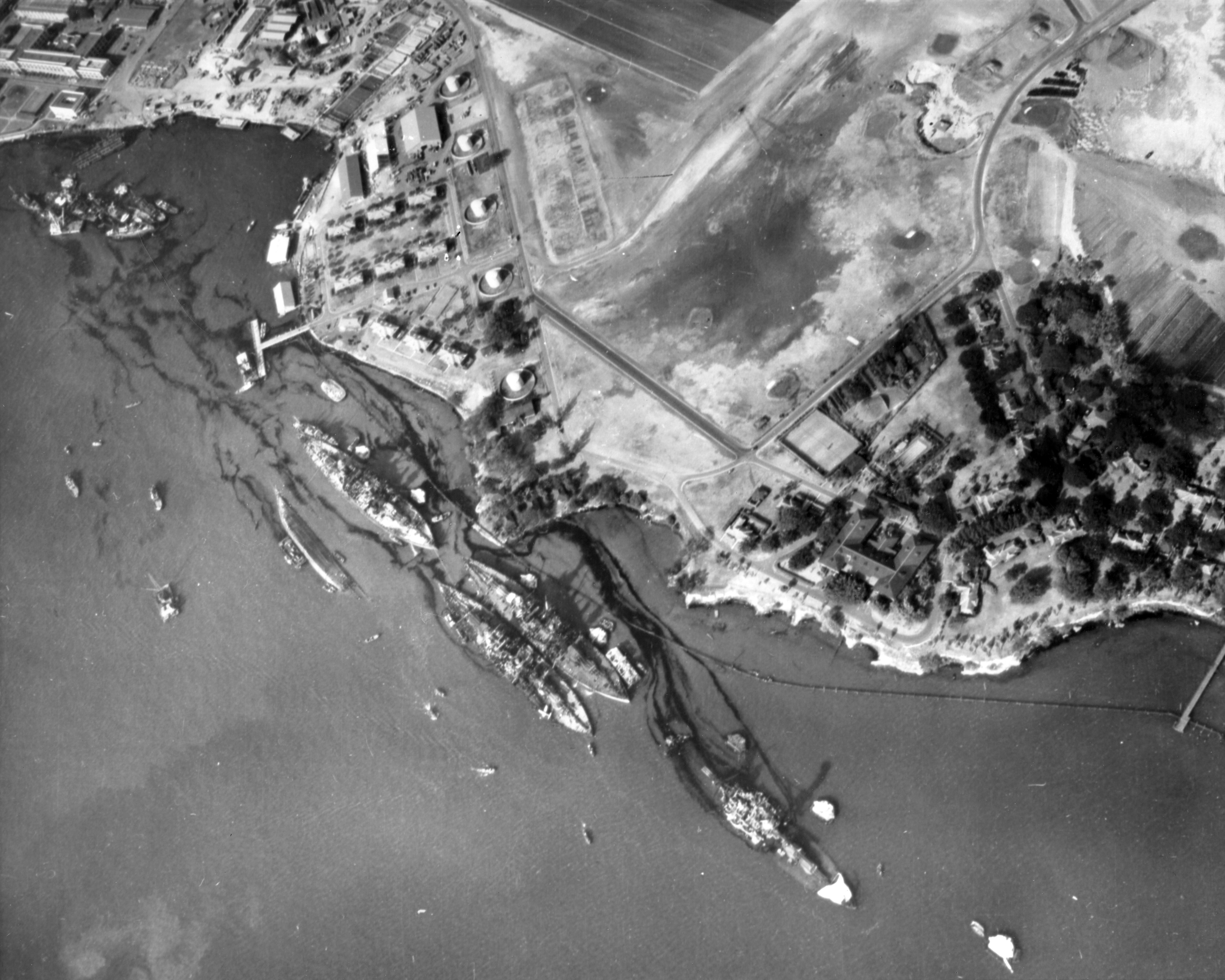
For a bonus, I found the below photo. It is a photo I have not seen before. I always appreciate things I've not seen before. It is of Battleship Row three days after the attack:
The fires are gone and the smoke cleared. You can see the multiple rivers of oil, most pouring out of the Arizona. The Arizona is on the bottom right of the ships. If you look closely, you can see the shadows of its superstructures, striking that iconic image with the fore mast crumbled over into its bow. The explosion literally obliterated the front of the ship, causing a catastrophic breach straight down through the decks. The harbor waters rushed into every level and nobody below decks had a chance. Except for one sailor, nobody in the entire front half of the ship survived. Rear Admiral Isaac Kidd, the highest ranking officer killed in the attack, was last known to be on the bridge. His body was never found.
In front of the Arizona is the Tennessee, nearest the island. It was damaged, but not badly. It was one of the first ships to return to duty, early in 1942. Next to it is the hapless West Virginia. Hit by everything, it almost capsized. The captain's decision to counter-flood kept it from doing so, instead it settled straight down, and you can see much of its port side is under water. It would be until 1944 before the West Virginia was back in service.
In front of them, nearest the island, is the Maryland. It was also lightly damaged and returned to service by early 1942. Next to it is capsized Oklahoma. Next to the Arizona, the Oklahoma had the largest single loss of life in the attack. 429 died, despite the best efforts to rescue them. Farthest ahead is the California, which actually sank, but returned to service in 1944.
The other two battleships are out of the picture. The Pennsylvania was in a dry-dock and barely touched, though two destroyers in front of it - the Cassin and Downes - were blown to pieces and would take several years to return to service. The Nevada was the other battleship. The fleet's flagship, it was located behind the Arizona. The only one to try to make a run for it, fear quickly arose that it would go down in the channel and block the opening to the harbor. Therefore it was ordered to cease its desperate gamble.
That's the gist of the battleships. It would be carriers, not battleships, that made the difference in the Pacific War. And by luck, fate or providence if you prefer, the American carriers were not there that fateful morning. The USS Enterprise was supposed to be there, but a sudden storm at sea damaged several of its escorting ships. Instead of going forward and keeping schedule, the captain decided to stay behind and help the ships damaged by the storm. As a result, the full wrath of the Japanese aircrews that morning fell on the capital ships - the battleships. Even when there were none left untouched, the subsequent waves would still attack targets that would have been better to ignore.
One final musing. Here is a scene from the movie Tora, Tora, Tora. A flop at the box office, it tried to be as accurate as two separate tellings of the same event - an American and Japanese perspective - would allow. On the whole, it succeeds. This is near the end of the attack. I've always loved the lone American machine gunner. His fellows are all dead. All around him is destruction and carnage. Explosions are everywhere. His cloths are in tatters and he is wounded and bleeding. But he'll be damned if he gives up. And the choice of the pilot he finally hits, as well as the gunner's own actions, perfectly embodies the attitude and grit and determination both sides would bring into the conflict. Wars are horrible things, but sometimes they bring out the absolute best in people. A lot better, as we've discovered, than peace and luxury and leisure tend to do.
It was 20 years ago this year that this little gem hit the shelves. I'm not one to gush over things. I like things, and will talk about those things that interest me or that I like. But not all the time. Sometimes things I like fly under the radar, so to speak. I like them and that's good enough for me.
This is one of those cases. As I've said, if I ever had anything close to a sustained, long running hobby, it would be strategy games. Wargames fall into that category. But I like strategy games as a whole. Usually my preference is for historically based games, my love of history being the factor there.
We bought this some years ago. By now I'm thinking it must have been around its 10th anniversary, give or take. As the artwork suggests, it's a grand strategy game based on the Cold War. My sons are fond of asking how bad do things have to be today for people to be nostalgic for the Cold War. Yet when we consider the state of the world today, it's easy to see why some would look at those days with a sense of yearning. Nostalgia sometimes gets a bad wrap. Though I sometimes think the worse things are the more we trounce on those people who try to find the good of the past. You might say, the level of hostility to nostalgia might say much about how well we're doing with the present.
Anyway, if there was one trait from that time, especially the late Cold War, it was Optimism. That was the thing. Though the progressive movement was turning our attention more and more to the increasingly irredeemable sins of the West, America, Christianity, and pretty much anything west of the Urals, it was still wrapped up in a bundle of 'but look how much progress we've made!' Oh, there was still the insistence that we focus on those who 'fall through the cracks', or the insistence that we admit there is still work needing done. But the uber-narrative was that we were getting better, moving forward, and had much to be happy about.
Plus, though it's easy to look back and remember the stress and strain of the Cold War years, and it's not difficult to see we were already being weaned into thinking that the best we could say in the US was that we were no better than the Soviets, there was still the reality of the USSR. It was there. And despite the developing cultural emphasis on how cool the communists could be, we couldn't help but notice a dearth of those same people falling over themselves to move there.
Fact is, no matter how we sliced it or tried to blame Reagan, we still had the idea that over there was Mordor, and we were at least Gondor. As flawed and sinful as we were and as the focus increasingly was, we were still on the right side of the conflict.
And it looked like we were trying to learn from the past. Lofty ideas of putting behind us judging based on skin color or any group identity, being tolerant of differing views and lifestyles, restraining from judging either the past or the present, putting the pains and hurts of history behind us, being free to live and speak and think as we choose - those were mighty appealing social promises. Appealing, even if, in hindsight, it's easy to see those making such promises had some pretty long lists of provisos and qualifiers attached to those high ideals.
Now, I expect little from the games I love. Really. I don't get hung up on accuracy or details or really much of anything. Sometimes a design decision will leave me scratching my head. But then I remind myself that I'm looking at a playing piece on a board that is supposed to vaguely represent in often unimaginably abstract ways the complexities of the human experience, entire historical events, and often in the worst of circumstances. I'll usually give a pass to the designers.
What I do love, however, is when a game strikes that right vibe; that feeling that matches what the game is attempting to evoke. It might be the vast long term and complex logistical focus of World in Flames that allows you to sympathize with the massive organizational undertaking that was the Second World War, or the excellent mood of ancient Roman cloak and dagger that comes with The Roman Republic, or even a very broad sense of medieval feudal wranglings in that boardgame Fief. The game 1776 catches the scale of that Revolutionary Colonial era war feel, and Victory Games' The Civil War was the first Civil War game I played, and still the best for putting you in that time from a bird's eye view, at least IMHO. As I wrote some time ago, I even like the game Eldritch Horror for that Lovecraftian aesthetic it hits so well.
That's why I love Twilight Struggle. To borrow the old saying, it 'Gets' the Cold War and the whole feeling of that period in history. Even the parts of the game that tap into events long before I came along manage to pull me back to that time when we weren't fighting about reality, but instead were still trying to struggle for the right over the wrong in basic, common sensical ways.
The game itself is a pseudo-card driven game. The goal is to get the most points, and this is accomplished by pushing your side's influence into as much of the world as possible. And don't forget those obscure African countries in the middle of nowhere, they can make a difference. The one game ender is if certain events could cause the Defcon Rating to drop, and we all know what happens if it hits one (game over, both lose - a fun mechanic).
The cards themselves are drawn randomly, and played back and forth by each player. There are different sets of cards per era of the Cold War - early, mid, late. The cards have a point value that you can play to push more influence into an area, or invest in other nifties, like the Space Race or even the Olympics. The cards also have historical references printed on them that can be played instead, and they give a tremendously broad amount of benefits for your side or penalties for the other. The various historical references vary greatly from Woodstock and The Soviet Pact, to Sputnik, The Truman Doctrine, or heck, the whole of the Korean or Vietnam Wars. In the instructions, in keeping with the best of historical strategy games, there is a section that explains the actual historical basis for each card and the overall time period.
All in all, it seeks to unpack that era after WWII that changed how the era after such a catastrophic war might have unfolded, even if at the time we didn't realize that. And the game manages it on almost every level. A relatively fast game, it can be wrapped up in an hour or so. Or it can drag out. But once you get the hang of it, it's a fast play for two players. One that manages to pick you up and deliver you back to a time when you didn't need an explanation for the picture on its box.
Why did scenes like these from my college days make a young, liberal agnostic like me feel secure and confident even though they weren't supposed to? Because I wasn't an idiot, that's why.
Those were names loomed large in that pivotal time my life as I began transitioning from childhood to adulthood. Mangione came first, though I didn't know him by name at the time. It would be years later before I attached his name and larger body of work to that delightfully ubiquitous song that became his trademark. I mean, a flugelhorn? Who tops the charts in the age of Disco and 70s rock with a flugelhorn? His picture adorning the record sleeve was one of pure elation. I mean, I dare you to look at that picture and not smile:
Happiness personified
Malcolm Jamal Warner became a big name in my later high school and college days with his turn as Bill Cosby's TV son (a loosely inspired character from Cosby's own real life son). Like Michael J. Fox and Michael Gross on Family Ties, his easy chemistry with Cosby at times almost overshadowed the rest of the show. Since Cosby was such a cultural juggernaut at a time when America still had strands of homogeneity, it wasn't difficult learn Warner's name, even if only as part of the day's larger cultural tapestry.
Then there was Ozzy Osbourne. A lightning rod for self-made problems, Ozzy's was one of ups and some catastrophic downs. Not all were of his doing. Originally part of the provocatively named Black Sabbath, he dipped when, in 1978, an obscure group who opened for them on tour came to steal the show every night. That group was Van Halen. Finally, Osbourn formed his own group around himself, tapping into a young guitar virtuoso who gave Mr. Van Halen a run for his money - Randy Rhodes and the legendary Blizzard of Ozz and Crazy Train. Thus began the famous 'Guitar Wars' featuring Rhodes and Eddie that were broadcast in our area on 96.9, home of the Buzzard, and were required listening for most of my peers in my school. But alas, young Mr. Rhodes died tragically in the same manner as Buddy Holly and his fellow passengers, leading Ozzy down another spiral. This was after Ozzy was hospitalized for biting the head off of a rabid bat during a drug fueled concert appearance. Such was Ozzy's life. Part poster child for the sex, drugs and rock and roll Me Generation, part cautionary tale, part individual trying to scrape out a positive legacy before he passed.
And of course, there was Hulk Hogan. In my lifetime, never has Professional Wrestling been so famous with the wrestlers being household names - almost parodies of characters - than the early to mid 80s. And Hogan was the spokesman. Though I never cared for the wrestling gig, I had to admit that however inauthentic you might say wrestling was, give credit to a man who can pick up Andre the Giant and twirl him about. Like the WWF of the day, and the 80s in general, Hogan was larger than life. It was an odd time of excess, decadence, godlessness and strangely the last gasp of a somewhat pre-post-modern society.
It's easy to forget how much of a giant he was
With the exception of two musicians of wildly different musical genres, none of the four had much if anything in common. And yet they all loomed large - very, very large - in that time of my life when such things mean so much to a youngster. Well, Mangione's song loomed large since you heard it all the time. Like You Light Up My Life, but more agreeable. Yet they all made an impression on a time in my life I will never forget. Even if that time, like all times, must pass.
For all that has gone on in our country, it's amazing that when you think it's time to move somewhere else, you're still hard pressed to imagine where. As I've told my boys over the years, there are people in the world who would kill to have our worst day. Not that an American with a brain tumor the size of a watermelon is therefore not really suffering or shouldn't complain. It's just that we have so many wonderful blessings we can take for granted that barely rank fiction in many places in the world, and throughout most of human history. That's why it's easy to forget how thankful we should be. Which might be part of the problem; a problem perhaps intentionally manufactured.
UPDATE: Another example of the malaise among those forgetting our blessings comes from Where Peter Is. A young John Grosso demonstrates that common line of thought, especially among the Left, that says America deserves to be celebrated only if and when America votes Democrat and acts as the Left dictates, and not a minute before. This is accomplished under that liberal umbrella that claims to be tolerant of everything but evil, while defining evil as anything that isn't liberal. So they're not saying Americans must conform to their politics, they're merely saying America shouldn't celebrate in such evil times, which looks to all observers like being defined as not conforming to progressive politics. While leftwing activists like you'll find at WPI are more flagrant with the notion that praiseworthy only means progressive, I fear it has filtered down into a common mentality, especially among younger generations. An excuse to avoid sacrificing or committing to a cause unless it's worthy of me - and I can always make sure it never is worthy of me, so I needn't bother with those sacrifices and commitments to other causes.
BTW, I've taken to visiting WPI semi-regularly to note the sparseness of Pope Leo articles compared to how you couldn't go five minutes without seeing new articles singing the praises of Pope Francis on a regular basis. I find that interesting, and yet I've noticed it across the liberal Catholic spectrum. We'll see.
Yesterday was the first time I remember that the news didn't mention the anniversary of D-Day. Not in the morning shows, nor in the local outlets.
Granted, I couldn't watch every station at once. And I didn't watch the entire broadcasts. But in the past, I didn't have to. At least once or twice, every June 6, just in casually having the news on and getting ready, I would see one or two mentions at least. But not yesterday. If it was brought up, it must have been at the bottom of the hour after I had gone.
I wanted to wait and post on what I saw and see what they said, but I saw nothing. In print media, the only major national outlet in the news feed that I saw was the NYT, using D-Day to criticize President Trump's relationship with our traditional allies. But I guess at least it mentioned the day.
I suppose this is what comes of time. Especially today, where the past is increasingly remembered only to condemn, and as quickly forgotten. When I was growing up, WWI was seen as ancient history, the Spanish American War even more so. WWII was the dominant historical memory, at least until the 1980s, when Vietnam overtook WWII in the pop culture mindset. I've often wondered if we would have remembered WWII as long as we did, had it not been for that Boomer penance period of Saving Private Ryan, The Greatest Generation and Band of Brothers and similar (not to mention that all too brief wave of post-9/11 patriotism).
Who knows. Had those not brought WWII back into the public mindset, WWII might have been as obscure for my boys as the Spanish American War was for my generation. But it did get a boost and a generational round of attention in those days. So for the following years, at least December 7th and D-Day received the obligatory mention each year.
A few years ago, during the 2020 revolution, I recall some tried to insist it was time to stop remembering Pearl Harbor and instead remember the beginning of the Japanese American internments. That didn't appear to fly. But I note that following that, no real mention was given of that day of infamy in casual news broadcasts in any event.
Now D-Day seems to have landed on the chopping block. Whether we can draw a line between this and other events I've noticed that have received no media attention, I don't know. I just know that yesterday, for the first time I ever remember, that Day of Days went without mention in anything I saw. As, I suppose, all things must.
All things must pass None of life's strings can last So I must be on my way And face another day.
Those are Christmas packages that were mailed to soldiers on the front lines in 1944. They are the ones whose recipients were either MIA or KIA. Now they sit in NYC, waiting for Return stickers, to be sent back to the grieving senders.
I don't know who's to blame for the state of our society today. Perhaps even the soldiers then played a part. I don't know. But it seems we could do better than we've been doing for the sake of those Christmases missed.
From the spectacular miniseries Band of Brothers. The point: The laundry not picked up largely belonged to men Sgt. Malarkey knows were killed in Normandy. I think Christmas works best when we ditch our 'Nothing to kill or die for' mentality and go back to a 'Greater love hath no man than this' way of thinking. It certainly makes more sense.
It was the the USS Curtiss, the first purpose built seaplane tender in the US Navy (that is, not another type ship converted to a seaplane tender). A seaplane tender, as can be guessed, was used to support the use of seaplanes that played an important role in the war. Like many things, most probably don't know of it unless WW2, or Pearl Harbor, are your subjects of preference.
Nonetheless, like anything in history, there were more stories from that one event than people. Now is the time to get their tales, since there are so few left to tell them.
Here, here, here and here. It's barely mentioned now. In fact, here in Buckeye land, this is the time when different outlets point out the effort by some to change the name of our state's capital. One network - our local CBS affiliate - now refers to the city and city news as 'C-Bus.' In fact its morning news magazine that was Wake up Columbus is now Wake Up C-Bus. That's long been an informal nickname in these parts, but usually not for official use.
Today Columbus is all but gone, and increasingly if the day is mentioned at all, it's Indigenous Peoples Day, or similar. Of course now we're seeing challenges against everything from Washington and Jefferson, to the Constitution itself (earlier editorial from the New Yorker).
Things are happening fast. Vichy Conservatives have long hidden behind the idea that bellyaching about such trivial things is just sissy stuff. They'll wait until the gulags or the gas chambers are in full swing, then they'll start to worry. Never a great strategy. And looking at where things are and where they are going, and how quickly they are getting there, should be all the evidence you need for that appraisal.
As for the Left venerating cultures who did what Columbus is accused of doing or worse? Need I prattle on about that? I think by now the reasons for that strange hypocrisy should be clear.
Ah autumn. I've written a lot on my love for this time of the year. To many times to link to. Truth be told, things like that seem less important in recent years. That doesn't mean I don't care about it anymore. It just means things change.
This year has been a bit strange. Of course it must be global warming. Everything is. In fact, my sons were talking a few weeks ago and they asked if the news was always this way. That is, everything is apocalyptic, everything is the first, historic, unprecedented, in any way possible the worst, or what have you. I said the press has always wanted that headline grabber, but I do think we're at a new level where everything is the most of anything all the time. So it's tough to sift through what is and isn't unusual on some significant level.
This year, the weather has been wonky. They say it's Ohio's worst drought since we've been keeping records. Meanwhile, toward the end of August, it got very 'Fall-ish.' Temperatures dropped in those dog days of summer, the sky was overcast, and it had a genuine feeling of fall.
I think that made the next several weeks through September seem all the more intolerant as they shifted and the heat swept in, with day after day near or above 90, while no rain, no rain, and no rain again. So this last week, despite it still being a bit warm for this time of year, things seemed truly fall like after the heat had one last hurrah.
Because of schedules and changes for the boys, their school and jobs and visiting CEOs and my wife's own work events of the last week or two, we had the chance for three of the boys and me to go out like old times. I wish our fourth had been with us, but just getting out and about with the three of them requires the planets aligning in ways that verges on the miraculous, so I can't be picky.
On that last day of sweltering heat, we visited a travelling replica of the Vietnam Veterans Memorial. I visited the real McCoy years ago, and our oldest - still in public school at the time - went to Washington DC and also experienced it. This was a chance for the others to take it all in. Not just the memorial, but when the memorial was built from a different age and time, when reconciling and putting past grievances behind us was a dominant cultural mandate of the day.
Then came the weather change, and it was to the Cathedral of St. Joseph in Columbus, then eating out for lunch, and finally a jaunt around Columbus to find some historic sites for furthered education and broadening of minds. This was accomplished by looking for those remnants of the Mound Builders, a pithy designation for American Indians who - guess what - built earthen mounds. They must have been plentiful in these parts, because there seems no shortage of reminders of their ancient presence.
Then it was back home, and getting back into things. My wife was home that day, which allowed my mom to be taken care of while the rest of us explored. Again, it isn't easy getting even a couple together. So when we do, it's cherish the moment and the memories, and hopefully what lessons from old memorials ancient and new we can learn.
One of several displays at the Memorial from the period, no doubt a blast from the past for those who served.
Without anyone in the family who fell (though two served), we looked up the one veteran from my home town who was killed in action.
The boys contemplate the wall and come away with their usual insightful observations and musings. I was taken by the old emphasis on 'we must reconcile and put the past behind us.' Another world.
The Harvest Moon was bright - even a man who is pure in heart they say.
With leaves down and blowing through the air, it looked more autumn-like than the warm temps would suggest
We went to Mass at the Columbus Cathedral, then ate out together Then decided to look for some Indian Mounds scattered about the city
Details of Mound #1
It doesn't look like much, but if you ponder that we're looking at something that has stood for thousands of years - not bad.
The historical information marker for Mound #2
The second mound had a little more around it, including a surrounding stone fence that looked like it was lifted from the Irish countryside.
I've often said their best pictures are taken while they're getting ready for the picture to be taken. Though what my youngest was doing is beyond me
The long sleeves, the clouds, perfect fall. Our fourth son's absence was felt, but beggars and choosers. Just getting out with the three of them at this time is almost herculean in the logistics involved.
Returning from our outing to a nice fall scene. Many of the leaves are actually just dead from the drought, but it does strike a nice autumnal feel.
Gratuitous daughter-in-law and little angel eyes pic!
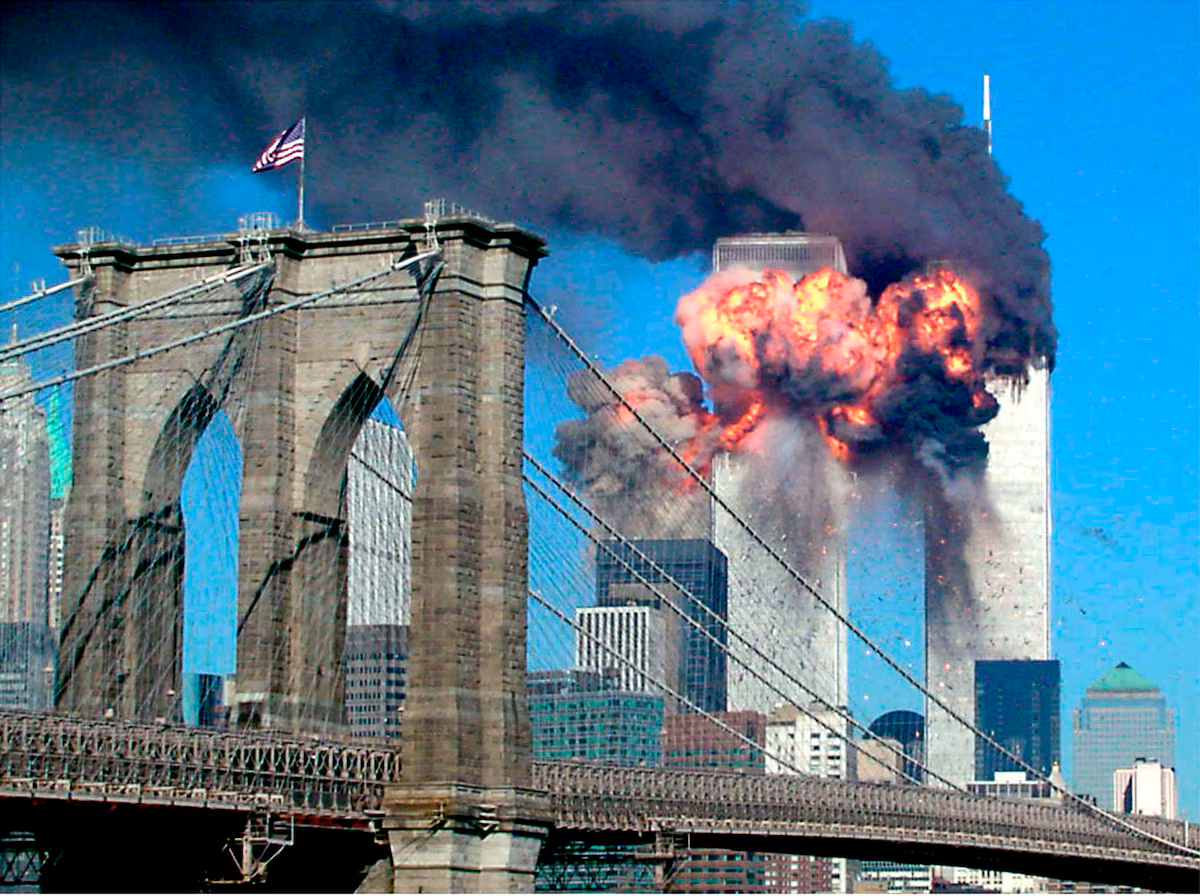
My granddaughter was born almost as far away from 9/11 as I was Pearl Harbor. I thought that was noteworthy. For now, remember those who fell victim to the attacks and all the suffering that came after.
Is different from why I never got into MLK Day. I didn't care for MLK Day because, to me, MLK just became discount Jesus for a nation afraid to invoke Jesus for fear of being called names. As opposed to whatever official reasons, that was my guess. And that is why I imagined it wouldn't last forever.
Since 2020, MLK day hasn't been what it used to be. When my sons were in public school, they began hyping MLK before the Winter Break that happened at the end of December. Then into January it was MLK all the way. That focus would continue through Black History Month. There were also ample other times in the year to focus on MLK and America's racist identity: Colonial era, the Revolution, the Civil War, Reconstruction, Segregation and Jim Crow in the 20th Century.
Of course it wasn't just school. In my ministry days, whenever I heard other pastors preach, it was common to hear them quote or somehow invoke MLK. Scarcely did a sermon or a lecture or speech pass without at least one mention. Sometimes he would be the exclusive focus or reference, even when Jesus barely got a dashed off mention. News reports, college and high school lectures, editorials, documentaries, news interviews on television - you couldn't go three days without hearing of MLK or at least the broader Civil Rights Movement to which he was attached.
Since 2020, however, that has passed. There was an attempt to insist we had the whole MLK legacy wrong. Turns out MLK thought nothing of dividing people into skin color and judging accordingly. And not a few posts and editorials said MLK was warming to the whole ultraviolence approach to justice. Which prompted my sons to rename him MLK-Ninja Warrior. So singing the praises of the Man of Peace isn't as easy now that we realize violence can be a wonderful answer and it is about judging based on skin color. Which is likely why I haven't heard of him for weeks, if not longer.
Now it's Juneteenth. And in this case you won't see me paying attention to it because, like Critical Race Theory, I have yet to hear a straight answer regarding what it's all about:
1. A holiday for the black community about black culture and black only and everything, with a fair dash of America's racist past.
2. A holiday for everyone, but whites and others are merely invited, the planning and focus being on blacks in America and blacks in America alone, with a fair dash of America's racist past.
3. A holiday commemorating the historical event of freeing the last slaves in America which should become our real independence day, with a fair dash of America's racist past.
4. A holiday that is important because it was made by blacks alone, and the federal government merely put a stamp of approval, rather than coming up with it itself. Again, with a fair dash of America's racist past
4. A holiday commemorating the government sending the US army to Texas to inform the slaves that they were free, being the last primary holdout of enslaved African Americans, that should be for all people.
Until we get an executive decision on what it's actually about, I'll hold off. Especially since I'm already seeing more and more black Americans preferring a combo of #2 and #3, with a dash of #4. In one of our local news FB pages, several jumped into the comments to all but say it's about black everything and July 4th is dead to them. My attempts to explain that without July 4th you don' t have Juneteenth went about as far as you'd expect.
So nope. Right now, my gut feeling is that its main purpose is to 1) perpetually keep the sins of America alive as yet another month becomes a vehicle for trashing the Western Tradition and its values, 2) dividing people up between groups antagonistic toward each other, and 3) downplay or outright erasing the heritage, heroes and history of the United States.
Since I'm not stupid enough or uneducated enough to buy into such things, and there is no clear consensus on what the whole thing is supposed to be anyway, I think I'll spend my time elswhere.
Note what is missing. What happened to 'a holiday for all Americans'?
May 9, 1962, an obscure record store manager sends a telegram from a London post office to a backwoods seaport that he has secured a recording contract for one of the local music groups. The rest, as they say, is history.
Victory in our ongoing wargame that is! Heh. Sorry, no victory for the modern West, we must delve into the fiction of strategy games or speculative history for that modern scenario.
So we're playing that game of games, World in Flames. A grand strategic WW2 game if there ever was one. I wrote on that gamein the past. We've been playing it for some time now, when we can.
That's because it isn't easy getting together for these things anymore. Sometimes we play on a 'deal me in/deal me out' basis. Right now it's my third oldest - our board game guru - and me, with a couple other brothers when available.
He is the Axis countries, mainly Germany and Italy. I'm the Allies, mainly the US and England, and France for what it's worth. When available, the others take Japan and Russia and split China (communists and nationalists).
My third son playing Germany works. He's extremely aggressive in, well, anything he does in life. That fits here since, like any WW2 strategy game in the history of WW2 strategy games, much of what happens hinges on Germany. In this game, with the campaign we are playing (Global War: Sept 1, 1939 - end of August, 1945), Germany begins by having to declare war on Poland. It also has a few special rules to sweeten the deal. So him going that direction first was a sure thing. And it went about as you'd expect (though Polish forces around Danzig gave him some fits, more than they probably should).
What comes next is based on the player's choice. Go east? Probably not. West is a better move. That's because another staple of grand strategic WW2 games is that France is usually dead man walking. The only hope a player of France has is that the German player chooses not to follow the historical footprints. But since that never happens, it's only how and when France is defeated, not if.
Which is the victory I mentioned in the title with some gloating on my part. Per the Players' Notes, the most you can hope for with France is to delay, delay, delay. And cause as many German losses as possible.
Historically, Germany ended the famous 'Phony War' by invading the Low Countries and France in May, 1940. By June, France was finished. So in this game, Germany taking France out before the end of June is considered a victory. That didn't happen.
He even peels eggs aggressively
The next goal if Germany targets France is to make sure France it taken by at least July or, worst case, August. That's starting to narrow options. As in every WW2 game, Germany has everything it needs to win - one at a time. Two at most. It can take France, or England, or possibly the USSR. It can't really do all at once. To go after England and Russia means taking France first. And by September, the weather in this game begins to turn and make coordinated actions like invading England a long shot (there's over a 50% chance that weather can negatively impact at least something). If he can't take France by August, then it pretty much narrows his options, most likely eastward. Which takes the pressure off England. So it's August or bust. Well, that didn't happen either.
After a series of moves and setbacks against the French, he conceded he probably won't be able to take France this turn (turn ends at the end of August). A combination of perhaps his decision to start breaking up his units and sending units south before sealing the deal in France, some darn good dice rolls for me, and, if I may, some good planning on my part, I more or less bogged things down.
In addition to this, his air force has taken a beating. After the initial invasion where he did run roughshod over my air fields, the French and English have given as good as they've got. In game scale terms, Germany has lost about 1500 aircraft during this time (which isn't far from the historical numbers, but worse than he hoped, especially since the Allies didn't end up losing nearly as much).
Another bonus for me is that he has had to focus exclusively on land actions. Turns are made up of a variable number of rounds. Long and short, in each round within a turn you get to pick a single action type for each country corresponding to the main divisions of the modern military: Air, Land or Naval. In each, you can do anything with that type without limit, usually to the exclusion of the others (with some exceptions). There also is a combination action, which allows a little of each, but not much of any. Because I slowed him down, he has had to focus all on Land actions. Which means he hasn't been able to go after those precious convoys bringing materials, goods and supplies to merry old England across the Atlantic.* Another win.
So overall that is a victory for me! Against his competitive and typically good strategic and tactical thinking, I'll take it. I had thought of posting an ongoing journal of the game, but realized who am I kidding? We barely have time to play the game! But every now and then I might give an update. Especially when it makes me look good. :)
OK, an addendum. I told him I was going to post this and he objected with much objection. Stalled, he said. France is still all but finished. Likely by the first of September. True, what I said is accurate. But he has had some better news elsewhere and it hasn't all been a loss.
At least I damaged one of his best
For instance, in the Mediterranean Sea, his Italian navy has given England a run for its money. I don't know why. But he's been cleaning my clock there. The good news for me is that in Libya proper, his Italian forces are everything you expect from WW2 era Italian forces. Which has been a problem for him (in games with Italy, like the larger Axis & Allies games, he prefers an audacious Italian strategy). Here he's thwarted by the units being modified to account for that famous Italian fighting prowess. Knowing history, he began - possibly too early - sending German units south to bail them out. He hasn't picked an HQ Commander yet - dare I hope for Rommel? (As tough as that would be, it warms the cockles of my historian's heart to think he might send his Rommel HQ down there to bail out a floundering Italy)
So it hasn't been all bad for him. He has Denmark and the Netherlands (though not Belgium, which is still defended by some stubborn Brit and Belgium units around Antwerp). Plus Poland. He's giving me fits in the Mediterranean. And France is close to done. But not as soon as he needed to give him more options. And with him and his clever mind, reducing his options and stalling his plans is usually the only way I can hope to win no matter what game we play.
*The one thing he can use is his fleet of Auxiliary Cruisers, or Merchant Raiders. They have special rules. These were ships used that were more out of a Transformers movie. They were modified merchant ships, tankers, ocean liners - the munitions and armaments being cleverly hidden. They traveled incognito and could spring to life with the snap of the fingers, catching Allied ships by surprise. He hasn't done much damage to my merchant ships so far, since those raiders are 'long shot' units. But in a bugger of bad fortune for England by way of surprises and bad rolls, I've lost two cruisers to those annoying things - the Fiji in the N. Atlantic and the Ajax off the cost of Portuguese Guinea(the total lost in WW2 to such German vessels, so it had best stop there).
Real history: The Aux Cruiser Kormoran, which did sink the cruiser HMAS Sydney
Let's face it. Our nation has been teaching its kids to hate our nation and everyone in it for years. Ages ago when we still had cable, I remember watching CNN. Your typical roundtable discussion. It was Larry King, but someone else was the host. I can't remember the topic. But I remember what some young scholar activist said.
She said America is falling behind because we live in the age of STEM. Of science and tech and genetics. In the last century, it was an industrial age. And that fit America fine. After all, any stupid can be a blue collar construction worker or coal miner. But STEM takes smarts, and that's always been outside the grasp of Americans.
Now, she didn't say it that bluntly, but it wasn't too far off either. I've seen that observation echoed more than once over the years. Which, of course, is false. America was always at the head of the race for medical, scientific and tech breakthroughs during the age of invention. Many of the inventions I'm sure that young woman takes for granted came from America and Americans.
But we were also a hard working, get your hands dirty, build and accomplish nation as well. And nothing demonstrates that more than our experience in WW2.
It's been said that the American soldier's best asset was his ability to do. To build. To improvise. So many soldiers had worked with their hands, could disassemble an automobile, could build their own houses, that in the military they were quick to adapt. And the military itself demonstrated this time and again. We might not have had the best of anything, but our ability to improvise and turn on a dime was second to none.
That is seen in all its spectacular glory in what my sons call 'slap it on a Sherman.' The Sherman tanik was the second most produced tank in WW2. Second only to the Soviet's famous T-34. Unlike the T-34, the Sherman was found everywhere, and used by more countries than any other armored fighting vehicle.
But beyond that, it's almost hilarious just how we were able to adapt it to anything under the sun, beyond just being an army tank. That's where my boys get that saying. Which they use when it comes to us improvising or having to think outside the box on a dime. Because on any given day, that Sherman could become a bulldozer, a repair vehicle, a rocket launcher, minesweeper, or, as in the case below, a crane:
I hadn't seen that before. It popped on on a history page I follow. Heh. Just one more thing. It was used to facilitate the moving of heavy rollers to aid in the recovery of armored vehicles.
Here are some other pics of the Sherman tank and its various identities based on the need at hand:
The one with the iron spikes on the front is the famous 'hedgerow clippers'. The hedgerows of Normandy famously caught us off guard. Mammoth hedges whose roots stretched down to China, we had to go around them through sometimes narrow paths and gateways.
The Germans, however, being the best trained of the WW2 armies, seized upon this and made sure every path through the hedgerows was heavily guarded. Much to the misery of Americans. Until an army Sergeant, Curtis Culin, came up with an idea, based on a conversation he had with a 'hillbilly named Roberts' (according to historian Max Hastings). Why not take those metal anti-landing devices from the Normandy beaches, modify them, and slap them on a Sherman? The world's biggest hedge cutters! And it worked.
That was the old American ingenuity once celebrated, by the 1970s mocked, and today forgotten. For me, I prefer to celebrate that sort of thinking and accomplishment. Not the thinking that celebrates what we celebrate today.

.jpg)


_burning_after_the_Japanese_attack_on_Pearl_Harbor_-_NARA_195617_-_Edit.jpg)
,_USS_Cassin_(DD-372)_and_USS_Pennsylvania_(BB-38)_in_Dry_Dock_No._1_at_the_Pearl_Harbor_Naval_Shipyard,_7_December_1941_(306533).jpg)


.png)

,_by_John_Trumbull.jpg)
.jpg)






.jpg)